Most MedTech companies underestimate what a brand system actually includes. Here is every component, what it does, and why the sequence matters for commercial execution.

A brand is not a logo. This needs to be said plainly because the word has been used interchangeably with visual design for so long that most founders think they have a brand when what they have is a color palette and a wordmark. Those are the outputs of a brand system. They are not the system itself.
A brand system is the architecture that determines how a company is perceived, positioned, and trusted across every touchpoint it has. When it is built properly, it makes every other commercial investment perform better. When it is absent or underdeveloped, it caps everything else.
What a Brand Overhaul Actually Includes
Brand Strategy and Voice is where the work starts. Positioning framework that defines who you are for, what you stand against, and where you win. Messaging pillars that give every function a shared vocabulary. Brand voice definition that makes every piece of communication sound like it came from the same company. This layer is foundational. Nothing downstream performs without it.
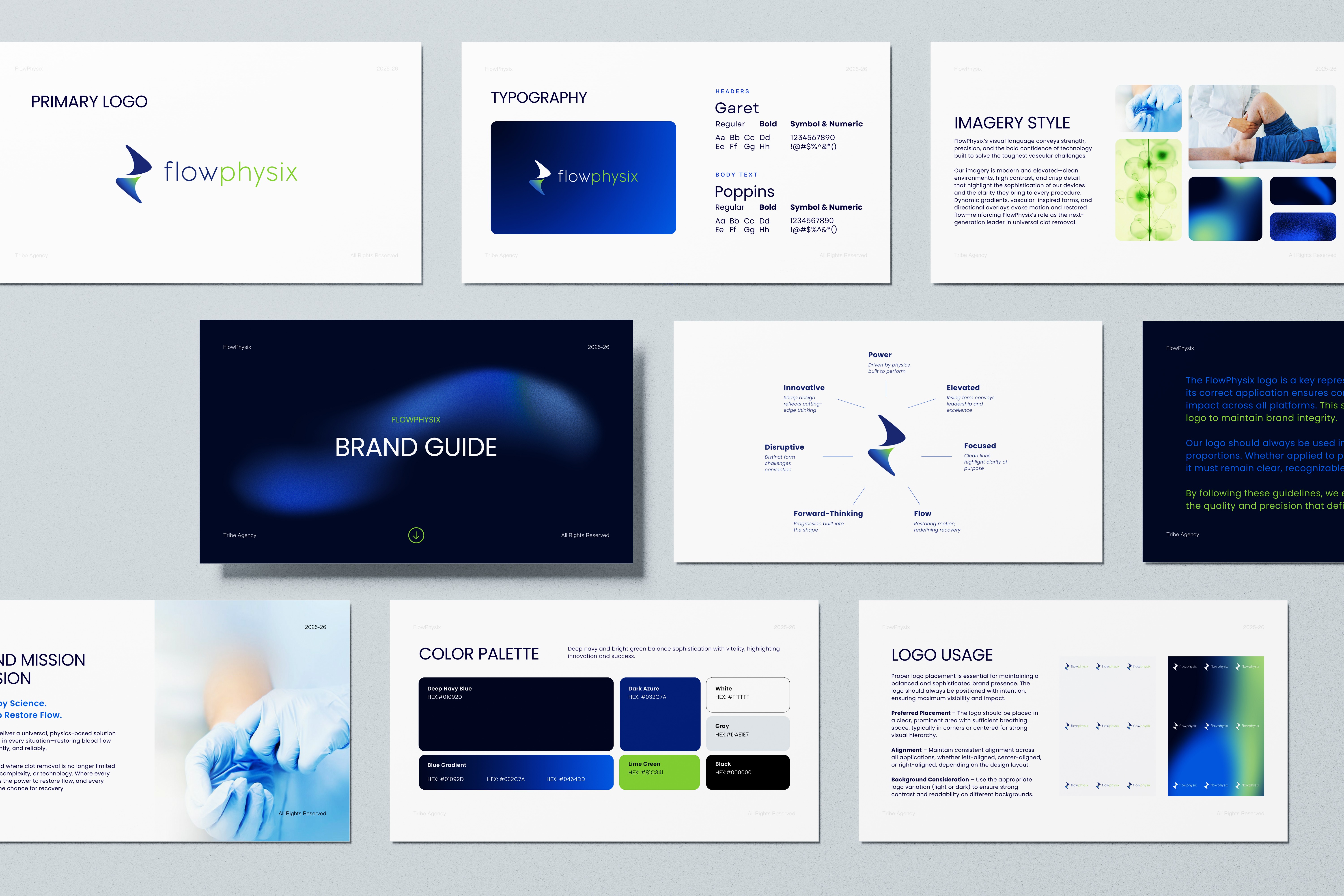
Brand Identity is the visual translation of the strategy. Logo system built for every use case. Color palette with rationale, not just selection. Typography system. Brand usage guidelines that make it reproducible by anyone on the team or any agency that ever works with you. The complete kit.
The full Brand Overhaul brings both together in a single engagement, producing a brand foundation that your sales team, marketing team, investor materials, and website can all draw from consistently.
Why the Sequence Matters
Most companies make one of two mistakes. They build the visual identity before the strategy, which means the design is solving for aesthetics rather than positioning. Or they build the strategy and never fully translate it into a visual and verbal system, which means the foundation never becomes usable.
The sequence is always: strategy first, then identity, then everything else. Brand guidelines that do not emerge from a strategic position become style guides. Style guides do not move commercial decisions.
What Changes After a Brand Overhaul
Sales conversations become more consistent because everyone is drawing from the same positioning and messaging. Investor materials tell a coherent story because the narrative architecture is clear. Website conversion improves because the messaging hierarchy is built around the buyer's decision, not the company's org chart. Talent acquisition becomes easier because the company looks like what it actually is.
Brand is the multiplier. It does not replace a GTM strategy or a strong sales team. It makes both perform better.
Q2 Brand Overhaul spots are limited. If your brand system is underdeveloped and you have a raise, a launch, or a commercial expansion ahead, the timing is right.
Not sure which engagement is right for where you are? Tribe offers three entry points depending on what your company needs most right now. The full Brand Overhaul covers audit, positioning, messaging, visual identity, and the complete brand kit. Brand Identity only focuses on the visual system. Brand Strategy and Voice only focuses on narrative, messaging, and positioning. All three are built to be the foundation your commercial work runs on.
Start at tribeconsulting.co or book a discovery call to talk through what your brand needs before the next phase of growth.