Your buyers are asking ChatGPT and AI search engines for recommendations instead of clicking search results. Learn the practical AEO strategies that help B2B brands become the answer AI recommends, from content structure and schema markup to original insights and off-site authority.
Your buyers have moved. They're not clicking through page-one results anymore. They're asking ChatGPT, Perplexity, and Google AI Overview direct questions: "What's the best [category] platform for a fast-growing B2B team?" And they're getting one answer. Maybe two.
Right now, that answer isn't you.
This isn't a Google algorithm update you can wait out. This is a structural shift in how buyers discover solutions, and the brands that adapt now are building a recommendation moat while everyone else catches up. Answer Engine Optimization (AEO) is the discipline that gets you there. Here's what it actually takes.
Why don't AI chatbots already know who you are?
It's not an awareness problem. It's a structure problem. AI models like GPT-4, Perplexity, and Claude don't rank pages the way traditional search engines do. They extract answers. They pull content that directly responds to a question, synthesize it, and surface a recommendation. If your content isn't structured to answer questions directly, it doesn't get pulled.
Most B2B content was written for two audiences: humans who skim and search bots that count keywords. AEO requires a third lens: AI models that extract, chunk, and evaluate. That's a fundamentally different writing discipline, and it's where most brands are currently invisible.
What should every piece of content do in the first three sentences?
Answer the question. Not warm up to it. Not establish context. Answer it.
AI search engines "chunk" content: they extract the top of a response and surface it as the answer. If your strongest insight is buried in paragraph six after a scene-setting intro and three hedging sentences, it doesn't get seen.
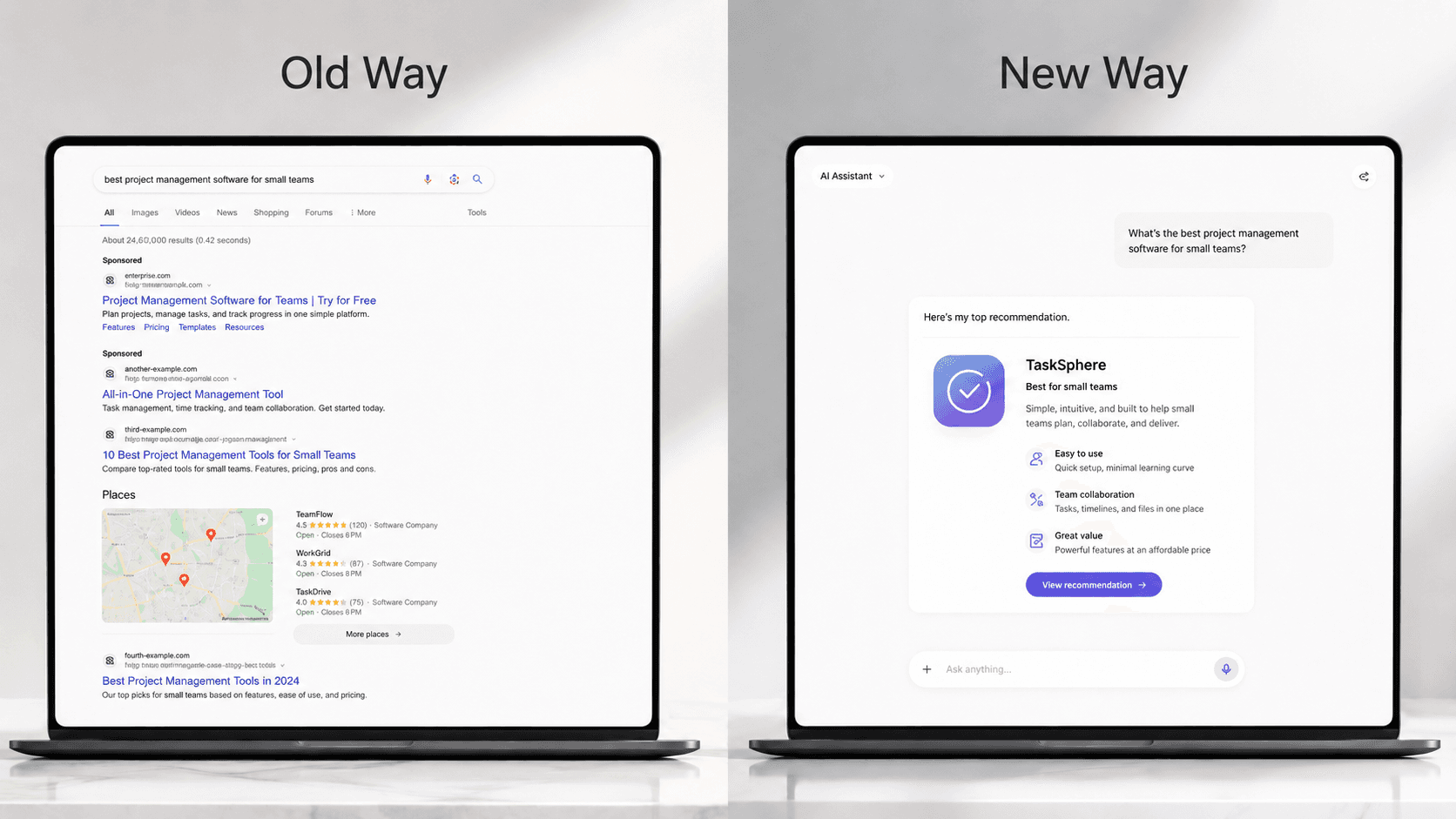
Front-load a direct, 2–3 sentence answer at the top of every post, every landing page, every FAQ entry. Then expand, explain, and add supporting context beneath it. Write headings that mirror how buyers actually ask questions: "How do you build a content strategy that generates qualified leads?" beats "Our Content Strategy Approach" every time. Question-style headings give AI models a clear signal about what each section answers.
Tables, numbered lists, and short bullets are far easier for AI to parse and cite than dense prose. This isn't dumbing down your content. It's making your expertise machine-readable.
Why does original data outperform great writing?
Because AI models reward content that introduces something new. If your piece covers ground that fifty other sites have already covered in roughly the same way, it gets skipped. If it includes a proprietary benchmark, a client outcome with real numbers, or a counterintuitive finding from actual work, it registers as worth citing.
This is the gap most B2B brands are sitting on without realizing it. They have original insight from client engagements, internal research, and years of accumulated pattern recognition. And they're publishing generic trend roundups instead.
Named experts matter just as much. A quote from your Head of Strategy, tied to her published bio or LinkedIn profile, carries more credibility than an unnamed assertion. AI models increasingly evaluate the humans behind the content, not just the content itself.
Does off-site content actually affect AI recommendations?
More than most marketers expect. Answer engines don't just read your website. They cross-reference it against the broader web. Third-party consensus carries a lot of weight.
If your brand appears in industry publications, gets discussed in Reddit communities your buyers trust, or has a strong presence on G2, Capterra, or Trustpilot, those signals become part of how AI models assess whether you're a legitimate recommendation. A competitor who's mentioned in three credible publications and has 40 verified G2 reviews will consistently beat a brand with better writing and no off-site signal.
That's the real value of earned media now. You're not chasing coverage for awareness. You're building the off-site consensus that tells AI: this brand is real, respected, and relevant to this question.
What technical changes actually move the needle in AI search?
Two things, in order of impact.
Schema markup. Specifically: FAQ, HowTo, Article, and Product schemas. These give AI models a structured map of your content: the difference between an AI guessing what your page is about and knowing exactly what question it answers. Most B2B sites still don't have this, and it's not a heavy lift to implement.
Entity consistency. Your brand name, description, founding date, and core positioning need to be identical across every platform where you exist: LinkedIn, Crunchbase, Wikipedia, your Google Business Profile, and any industry directory. Inconsistency creates ambiguity. AI models don't recommend ambiguous brands. They recommend ones they can clearly identify and verify.
What does this mean for your marketing right now?
The brands winning AI search over the next 18 months are treating their content as a structured database of direct answers, not a content calendar of articles written to check SEO boxes. They're building original insight into every piece, publishing with schema markup from day one, and running earned media programs with AEO outcomes in mind.
The difference between showing up in an AI answer and getting left out often comes down to a handful of structural decisions. They add up quickly, and they add up in your competitor's favor if you're not making them. The brands making them now are becoming the default recommendation. The ones waiting are watching competitors get named instead.
This is fixable. It requires a deliberate shift in how content is created, structured, and distributed. The playbook is clear.
Want your brand showing up when buyers ask AI? Book a strategy call at tribeconsulting.co