What the LSI 2026 investor panel said every early-stage MedTech innovator needs to hear. The jockey, the problem, and the venture math that determines whether you get a second meeting

I sat in on an early-stage capital panel at LSI Dana Point last week. The conversation was direct in a way that conference panels rarely are. Investors said plainly what moves the needle and what does not. Most innovators in the room, I suspect, walked out with a list of things to rebuild.
Three themes came up repeatedly, each one from a different panelist at a different moment, all pointing to the same conclusion. They invest in jockeys. They fund big problems with a short path to impact. And they already know your math before you walk in the room. If your pitch does not account for all three, it is working against you.
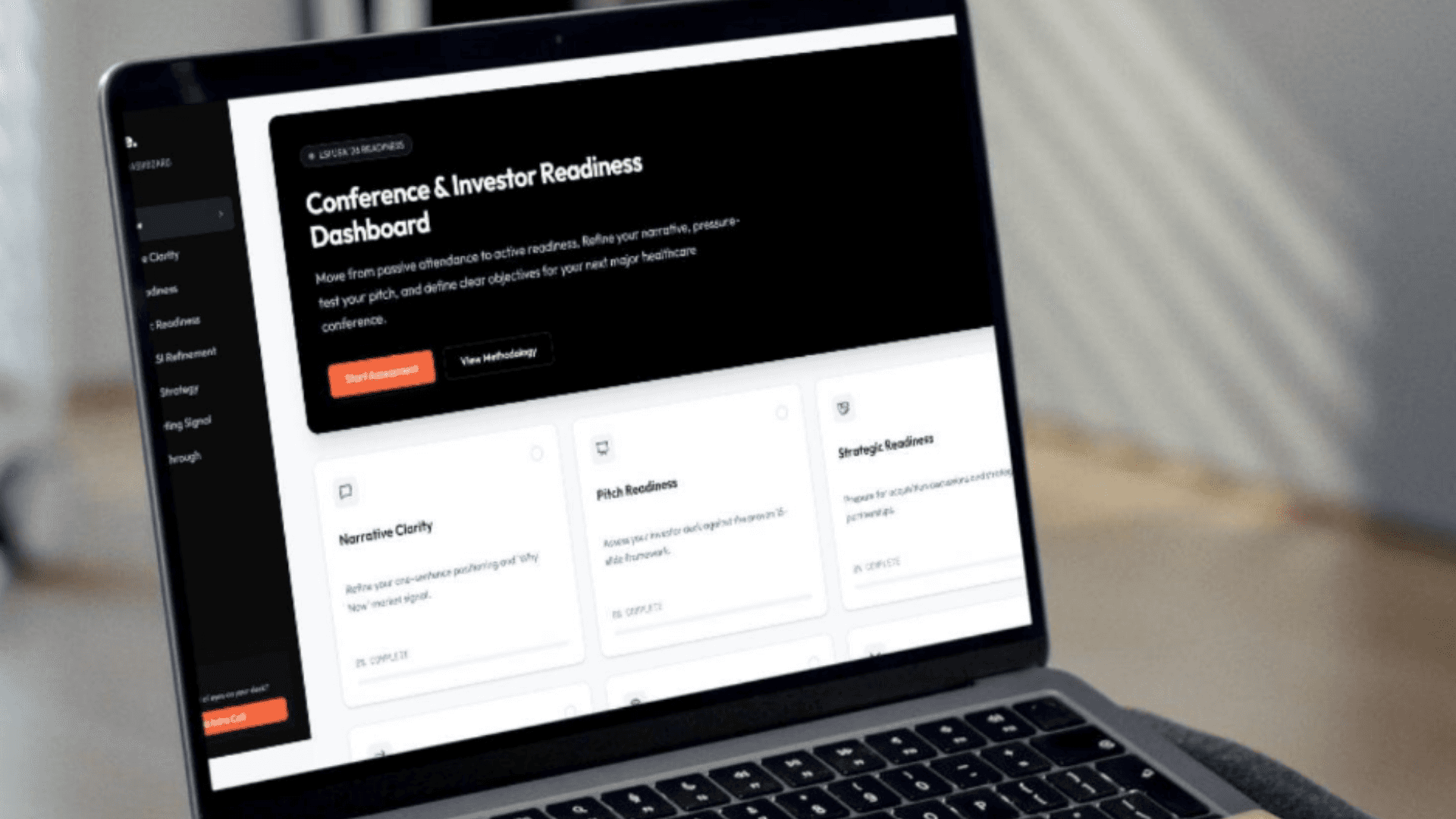
Before your next investor meeting, download our free Conference Investor Dashboard — a tool we built specifically to help innovators prepare for investor conversations at conferences like LSI.
The Jockey Is the Investment
This was the most consistent message across the entire panel. Early-stage MedTech is inherently high risk. The product is unproven. The regulatory path is uncertain. The clinical adoption timeline is long. What investors are underwriting at this stage, more than anything else, is their belief that you are the person who can navigate all of that.
The jockey framing matters because it changes what you prioritize in your pitch. Your technology is the horse. It is important. But horses without the right rider do not win races. Investors have seen brilliant technology fail because the founding team could not execute through the hard parts. They are pattern-matching for the innovator who has done this before, or who has surrounded themselves with people who have.
Proof points that establish you as the jockey: prior exits in adjacent spaces, clinical advisory teams with genuine domain credibility, participation in accelerators and incubators that signal external validation, and a team composition that covers the critical gaps between clinical insight and commercial execution. These are not credentials to bury in an appendix. They belong front and center because they directly reduce the perceived risk of the investment.
Derisking the jockey is often more persuasive than derisking the technology. Build your pitch accordingly.
Big Problems With a Short Path to Impact
Every investor on the panel came back to the same filter: is this a hair-on-fire problem? Not a real problem, but an urgent one. A problem that clinicians are actively trying to solve today with inadequate workarounds. A gap in care where the status quo is genuinely painful and the market is already signaling demand.
The pitch that wins is the one that makes the problem feel undeniable before the solution is introduced. Not through slides packed with market size data, but through a crisp, specific articulation of what fails today without your solution and who is affected by that failure. One clear statement of clinical unmet need, delivered with authority, does more work than a forty-slide deck that leads with the device.
The second part of this filter is the path. How do you get from where you are today to first-in-human, to regulatory clearance, to commercial adoption? A credible, milestone-based path that shows you have thought through FDA, payment, and revenue infrastructure tells investors you understand the landscape. Innovators who have not thought through reimbursement strategy, for example, create doubt about everything else in the pitch.
Organic customer pull is the strongest signal of all. If clinicians are already asking for your solution, if pilot interest exists, if LOIs are on the table before you have raised, that is evidence the problem is real and the market is ready. Bring that evidence into the room.

Do the Math They Are Already Doing
This is the one most innovators skip entirely. Every venture fund has an investment thesis. A return target. A portfolio construction model built around specific assumptions about risk, check size, and exit timing. When you walk in without understanding how your company fits inside that math, you are leaving the investor to do the calculation alone. They will be more conservative than you would be.
A fund targeting a 3x return on a 100 million dollar portfolio needs to see a credible path to an exit that moves that math in their favor. When you present your company without addressing what kind of return it can generate, over what timeframe, and through what exit mechanism, you have answered everything except the question they are actually asking.
This means knowing who you are talking to before you walk in. Seed-stage angels and institutional venture funds are not the same audience. Strategics evaluate a different set of criteria than financial investors. The deck that resonates with one can actively work against you with another. Research the fund thesis, the portfolio, the check size, and the investment stage before the meeting. Then position your company inside their model, not yours.
Understanding how venture capital thinks about risk and return is not optional
preparation. It is the baseline for having a credible conversation.
Talk About the Exit Early
Most innovators save the acquisition conversation for late in the diligence process. The panel said to bring it up early. Who are the likely acquirers? Why does your company fit inside their technology stack or commercial infrastructure? What does your business need to look like at exit to make the deal work for both sides?
Founders who can answer those questions clearly present themselves as operators building toward a specific outcome, not innovators hoping one arrives. The path to acquisition is a strategy. Treat it like one.
The Two Questions Worth Asking at the End of Every Meeting
The panel closed with a framework for ending investor conversations that should be standard practice for every MedTech innovator raising right now.
First: does this make sense for your firm at this time? Ask it directly. A clear no from a misaligned investor is more valuable than an ambiguous maybe that keeps you in a slow follow-up loop for months. Get to the no fast. It frees you to focus on the investors whose thesis actually fits your stage and category.
Second: how did you get here? Ask the investor about their own path. It shifts the dynamic, creates genuine connection, and opens the door to introductions even when the investor passes. The relationship matters beyond this raise.
The investors who are the right fit for your company are out there. The ones who are not are not worth convincing. Learn the difference quickly and spend your time accordingly.
If you are heading into conference season and want a tool to prep before investor meetings, download our free Conference Investor Dashboard. And if you want an outside perspective on how your narrative, deck, and investor positioning hold together as a single system, Tribe's Investor Strategy Session is designed for exactly this stage.
Book a call at tribeconsulting.co to talk through where you are.